Article | 29 August 2026
Volume 13 Issue 2 pp. 491-506 • doi: 10.15627/jd.2026.27
When Identical Canopies Fail: Orientation-Dependent Performance of Incremental Architectural Shading at Immersed Tunnel Portals in a Hot-Arid Climate
Zuhair A. Nasar,1 Intisar A. Alhilo,2,* Sabeeh Lafta Farhan,3,4 Tabarak Talal Salman,5 Layth Kraidi 6
Author affiliations
1 Department of Urban Planning, Kufa University, Najaf, 54001, Iraq
2 Department of Architecture, Kufa University, Najaf, 54001, Iraq
3 Department of Architecture, Wasit University, Kut, 52001, Iraq
4 College of Engineering & University of Warith Al-Anbiyaa, Karbala, 56001, Iraq
5 Architect, ZAN Engineering Consultancy, Najaf, 54001, Iraq
6 School of Engineering and Built Environment, Faculty of Health, Innovation, Science and Technology, Liverpool John Moores University, Liverpool, L3 3AF, UK
*Corresponding author.
Zuhaira.Nassar@uokufa.edu.iq (Z. A. Nasar)
entisara.alhillo@uokufa.edu.iq (I. A. AIhilo)
drsabeeh@uowasit.edu.iq (S. L. Farhan)
tabaraktalal12@gmail.com (T. T. Salman)
L.a.kraidi@ljmu.ac.uk (L. Kraidi)
History: Received 23 May 2026 | Revised 16 July 2026 | Accepted 3 August 2026 | Published online 29 August 2026
Copyright: © 2026 The Author(s). Licensee Solarlits Limited (Hong Kong). This is an open access article distributed under the terms and conditions of the Creative Commons Attribution 4.0 License.
Citation: Zuhair A. Nasar, Intisar A. Alhilo, Sabeeh Lafta Farhan, Tabarak Talal Salman, Layth Kraidi, When Identical Canopies Fail: Orientation-Dependent Performance of Incremental Architectural Shading at Immersed Tunnel Portals in a Hot-Arid Climate, Journal of Daylighting, 13:2 (2026) 491-506. doi: 10.15627/jd.2026.27
Figures and tables
Abstract
Global regulations for tunnels, especially concerning tunnel entrance shading and illumination, conceptualize them in terms of universal abstractions of engineering, divorced from geographical and geological features. This research addresses this overgeneralized approach by examining the efficacy of architectures’ structural increments and arrangements for offering shade to these portals in a coastal, hot, arid climate. The research methodology employed Radiance-based daylight and glare simulations via the Honeybee plugin for Grasshopper/Rhinoceros3D, to evaluate four incremental shading arrangements during critical seasonal and temporal conditions. These were applied for two immersed portals of tunnels in Basra (Iraq), specifically at Umm Qasr (W-SW) and Faw (E-NE). Simulation analysis employing the indices of physiological glare (“veiling luminance”, Lveil) and psychological glare (UGR, VCP) evinced that shade efficacy is significantly impacted by orientation. An Lveil-compliant architectural shading achieved a 96% reduction in the east portal’s Lveil, but differed in the west, revealing a hitherto unknown compromise, the “latent Lveil–comfort dissociation.” Overhanging canopies structurally inhibit the veiling luminance, yet legacy bright spots are thrown into higher relief against the darkened background, incurring psychological glare despite enhanced safety. Passive structural solutions thus minimize extreme baseline Lveil, from 445.4 cd/m² to < 80 cd/m² (the PIARC limit) under Option D, while Option C exhibited partial compliance, yet egregious psychological glare continued in both options with intense solar radiation. Outcomes indicate that structural canopies’ efficacy is hampered by low-angle sunlight. In certain microclimates, visual comfort drawbacks may be ignored by architectural shading specifications not calibrated to orientation, thus guidelines should be developed to accommodate structures’ geometric, reflectance, hydrological, and glare performance for particular applications, including coastal, hot, arid portals of tunnels.
Keywords
architectural shading, daylight glare, hot-arid climate, Radiance simulation; solar orientation, tunnel portal, veiling luminance, visual comfort
Nomenclature
| CGI | CIE Glare Index |
| CIE 88:2004 | “Guide for the Lighting of Road Tunnels and Underpasses” (international standard) |
| CIE | International Commission on Illumination (Commission Internationale de l’Éclairage) |
| DGI | Daylight Glare Index |
| E-NE | East-Northeast (Orientation/Direction) |
| EPW | Energy Plus Weather (Hourly meteorological data file) |
| L20 | A method for measuring light at tunnel entrances to prevent blindness among drivers |
| Lveil | Veiling luminance / Disability glare (cd/m2) |
| PIARC | World Road Association (Permanent International Association of Road Congresses) |
| UGR | Unified Glare Rating |
| VCP | Visual Comfort Probability |
| W-SW | West-Southwest (Orientation/Direction) |
| BRDF | Bidirectional Reflectance Distribution Function |
| HDR | High Dynamic Range imaging |
1. Introduction
Going into a tunnel by vehicle in conditions of high solar irradiance poses a major impairment of vision. Solar intensity exterior to underpasses is often 200,000 lux or more, typically dropping to 20 lux or less within a tunnel. At high speed (i.e., in busy, operational roads), drivers are commonly unprepared for this abrupt luminance transition when entering a tunnel portal [1,2]. As a result, vehicle operators might undergo disabling and discomforting negative impacts on their visual acuity, with quantifiable physical effects (e.g., increased pulse and contraction of the iris and pupil), making accidents more likely [3]. This common, inherent feature of passing from well-lit to dark environments is commonly dubbed “the black-hole effect,” and when someone is in charge of a vehicle, they can be more vulnerable to sudden swerves and crashes, or emergency breaking etc. due to visual disruptions [4]. The opposite of this, “the white hole effect,” occurs when drivers go out from a relatively dark underpass into extremely well-lit (i.e., sunny) exteriors [5]. Such portals between light and dark are linked to the majority (57%) of accidents in underpasses, and the need for mitigating illumination solutions accounts for 85% of such tunnels’ usage costs [6].
When the sun is lower in the sky, black and white hole problems are more acute, due to intense solar glare, especially in west-east tunnels. This glare is quantified by a “Predicted Glare Sensation Index” (PGSV) value of > 3 [7]. Existing solutions attempting to mitigate the problem focus on geometric solutions to minimize the dark-light contrast, but these efforts are typically expensive and of limited impact [8]. Engineering activities in this field use global regulations, especially the CIE 88:2004 standard, whose illumination areas and L20 adaptation solutions seek to mitigate the problem. While these offer a solid basis for seeking to optimize illumination safety, they offer little to nothing in terms of potential architectural solutions [9]. As a result, because legacy underpasses do not use architectural solutions for solar blocking, engineers’ main approach has been to deploy batteries of overpowering artificial lights to counteract external glare, which entails massive energy costs for operation, and requires constant and long-term monitoring and maintenance to ensure safety [2,10,11].
Conversely, emerging studies indicate that architectural modifications can leverage geometric efficiencies from the beginning of design phases to massively reduce operational costs by obviating the need for massive artificial lighting batteries (with reports of over 60% in operational energy reductions) [10]. For tunnels, integrating passive architectural features (e.g., roof canopies or shading panels) over the portal, can reduce glare before any electrical lighting intervention is required [1]. There is an ongoing debate regarding a “revolution in shapes” for the morphology of tunnel portals, and about whether designing special geometric shapes is more important than relying on artificial lights to mitigate the black hole effect [2].
Today, with rapid technological advancements, designers can use advanced computer simulation software, such as DIVA or Honeybee, to accurately predict glare metrics based on structural geometry, shifting the model from reliance on artificial lighting to intelligent structural design that treats natural lighting as a solution to the problem [12,13]. Designing an appropriate portal geometry is extremely important in hot-arid climates near the 30°N latitude. This study looks specifically at immersed tunnels built near waterways, given that water acts like a mirror, reflecting sunlight and making the portal approach zone much brighter than normal. Previous studies indicated that glare sensation values reached 7.1 after rain, where surrounding reflections caused 94% of the total luminance [7]. Despite this, standards of the tunnel analyzed in this research (in Basra, Iraq) were developed primarily using European weather data, which do not fully represent the extreme microclimatic and high-luminance desert conditions [14].
Furthermore, structural interventions are highly sensitive to solar orientation. A canopy that works well in one orientation might perform poorly in another when subjected to the sun’s low-angle, deep-penetrating rays [15]. Research on east-west tunnels show that canopies designed for the middle of the day exhibit significantly reduced effectiveness during the late afternoon low-angle exposure [7,14].
There is currently a gap in the literature regarding the intersection of tunnel portal glare, passive shading morphologies, hot-arid climates, and strict cardinal orientation. Specifically, no research has taken an identical canopy design and tested it across opposing tunnel portals to quantify the comparative performance variations. This paper aims to fill that gap by investigating how tunnel orientation (E-NE versus W-SW) changes the performance of shading structures. The study asks two fundamental questions:
- How does tunnel orientation (E-NE versus W-SW) alter the performance of geometrically identical canopies?
- To what extent can cumulative passive architectural interventions compensate for a poor tunnel orientation?
Rather than adopting a binary success-or-failure framing, this study posits that applying an identical canopy design across opposing portal orientations will yield highly disparate, multi-metric performance outcomes due to a latent “Lveil – comfort dissociation.” A structural design that accomplishes full safety compliance in one orientation may still introduce critical discomfort glare under the opposite exposure, demonstrating that performance is non-transferable. Additionally, low-angle (i.e., dawn-dusk) intense sunlight massively undermines the efficacy of completely horizontal structures.
2. Contextualizing portal glare: standards, architecture, and the orientation gap
2.1. Glare in tunnel environments
The design of efficacious tunnels illumination arrays necessitates a comprehensive appreciation of the elementary inhibitions adumbrated by CIE 88:2004, whereby underpasses span five sections, whose illumination needs (for operators’ field of vision) are calculated as per the L20 technique. Additionally, the threshold increase (TI) measure of physiological glare must not exceed 15% [9,16]. Nevertheless, employing electric illumination as a sole glare mitigator is massively problematic, and very costly to maintain at a safe operational level (e.g., every underpass stretch must have carefully calibrated illuminance to transition the user from tunnel entry to exit) [17].
Consequently, to understand what drivers actually see and experience, relying on a single glare metric is insufficient, as demonstrated by the results of numerous field studies conducted on long-distance road tunnels [18]. Therefore, to measure both physiological (disability) and psychological (discomfort) glare, researchers employ a complementary, multi-metric approach, incorporating indices such as DGI, UGR, VCP, CGI, and Lveil [13]. Currently, evaluating portal geometry according to these comprehensive metrics during the early design process has become highly accessible for designers, due to significant technological advancements in high-resolution Radiance-based daylight simulation engines, such as Honeybee for Grasshopper [19,14].
Xiao et al. [7] conducted recent field studies of L₂₀ luminance in an east-west tunnel in China, demonstrating that early design evaluation is crucial. They noted that the glare reaches unbearable levels during peak morning and evening hours, with the measured external luminance frequently exceeding the standards recommended values by up to 97% [7].
2.2. Architectural shading and form–performance relationship
Recent studies have progressively acknowledged structure as a core dimension of light, energy, and human comfort performance [10,15]. In this vein, specialist architecture such as canopies or louvers are essential in transitional illuminance zones (i.e., between light and dark), such as underpass entrances and exits [1,2]. Research has demonstrated that offering shade is a rudimentary but highly effective solution to bridge the luminance differential around portals, improving user comfort and reducing energy requirements in legacy systems [20], thereby reducing economic costs and the notorious lifetime carbon footprint of transport infrastructure [11,21].
As mentioned previously, 85% of tunnels’ energy use is for lighting transitional areas [6], and this can be reduced by 40% by reducing direct solar radiation (i.e., various forms of shading), thereby increasing comfort, safety, and environmental and economic efficiency [5]. However, a major inherent drawback of shading strategies is that they are vulnerable to the rising and setting of the sun, especially when oriented East-West [7,15]. Put simply, the functionality of overhangs hinges on both portal orientation and the time (of day) of use [14,15]. To address the low-angle issue, emerging literature has expounded the requirement to investigate shading using progressive and cumulative strategies, and to consider complete eradication of transitional glare with a certain depth of structure [7,15,22].
2.3. Limitations of existing standards in hot-arid contexts
Notwithstanding notable major advancements, global regulations are chiefly premised on European and North America climate data and assumptions, despite being utilized across the world. As a result, their practicality for hot-arid context with intense solar radiation is suspect [1,14]. For example, the diligent application of global standards in Amman’s Abdoun Tunnel revealed that electric illumination did not suffice to manage the black hole effect [1]. Building science investigations have opined that regulations ought to be calibrated to particular climate zones, which in some cases differ drastically from homogenized global norms; put simply, local, specialized, climate-appropriate frameworks are needed [10].
2.4. Research gap
The main contribution of this study to existing research is to compare the tunnel portal illumination performance of a coherent portal shading system for two converse portals of tunnels.
It extends beyond studies that have noted the described problems for decades (especially low-angle sunlight at East-West orientations) [7], and which have explored noon solar glare infiltrating tunnels via natural (passive) lighting systems (e.g., skylights), given that a third of accidents in tunnels occur during 10:00–13:00 [20].
More practically, this study addresses the need for academic evaluation of a particular project. As a result of the challenges described above, the immersed tunnel system in Basra, specifically the Umm Qasr and Al-Faw entrances, is subject to the hot-arid, high sunlight paradigm, water reflection, and opposing orientations of portals; this “perfect storm” is not adequately addressed by existing research [22]. Consequently, our research uses the “simulation-based optimization” technique [10], to systematically analyze serial physical structural solutions, progressing to the maximum shade depth configuration (Option D, as described below), to offer design knowledge germane to broader applications.
2.5. Theoretical model
To address the identified shortcomings in current knowledge, our research presents a theoretical model (Fig. 1) underpinning this research. This model spans sun angle, architectural shading geometric parameters, and vision-related comfort. As (Fig. 1) shows, the system is initiated with light performance factors, namely the environmental parameters (sun angle and orientation) and identical overhang structure. The theoretical model examines glare using standard metrics (DGI, Lveil, UGR, CGI, and VCP) that shape vision-related comfort. By reducing glare and improving vision-related comfort, the model posits relative Lveil improvement for the Al-Faw portal with residual comfort limitations, and UGR/VCP discomfort at Umm Qasr portal (hereinafter “Al-Faw” and “Umm Qasr”), due to the declining (low-angle) evening sun (psychological glare).
Figure 1
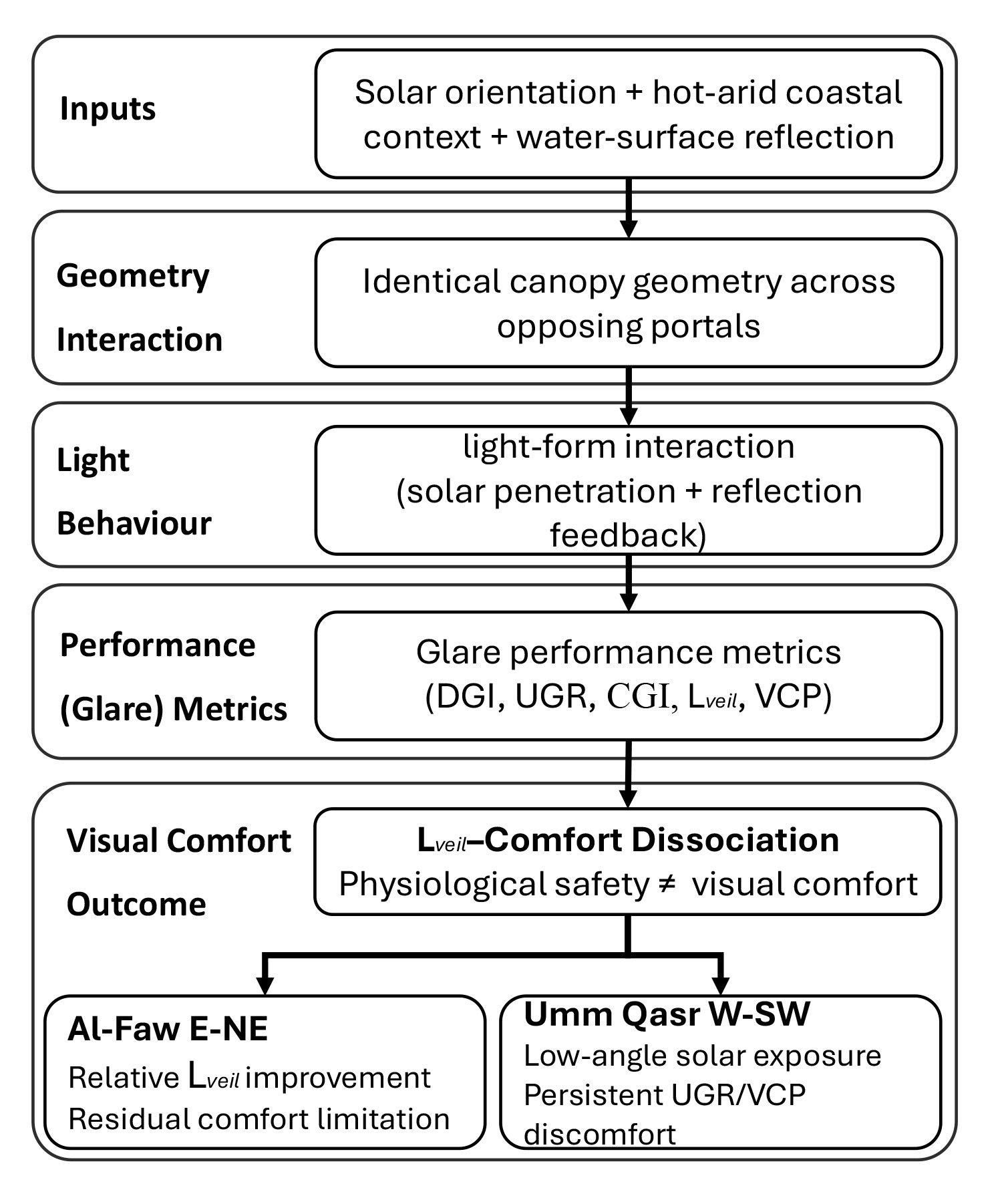
Fig. 1. Conceptual framework of studied factors and visual comfort outcomes at opposing immersed tunnel portals.
3. Methodology
3.1. Case study research design
Our research uses a comparative case study experimental approach [23], specifically analyzing Basra’s submarine Khor Al-Zubair Tunnel (30.0°N, 47.9°E), which connects Al-Faw Peninsula to Umm Qasr port (Fig. 2). The study area is characterized by hot desert (BWh) climate with extreme microclimatic conditions, including continuous clear skies year-round, strong water surface reflections, and solar irradiance exceeding 2000 kWh/m²/year.
Figure 2
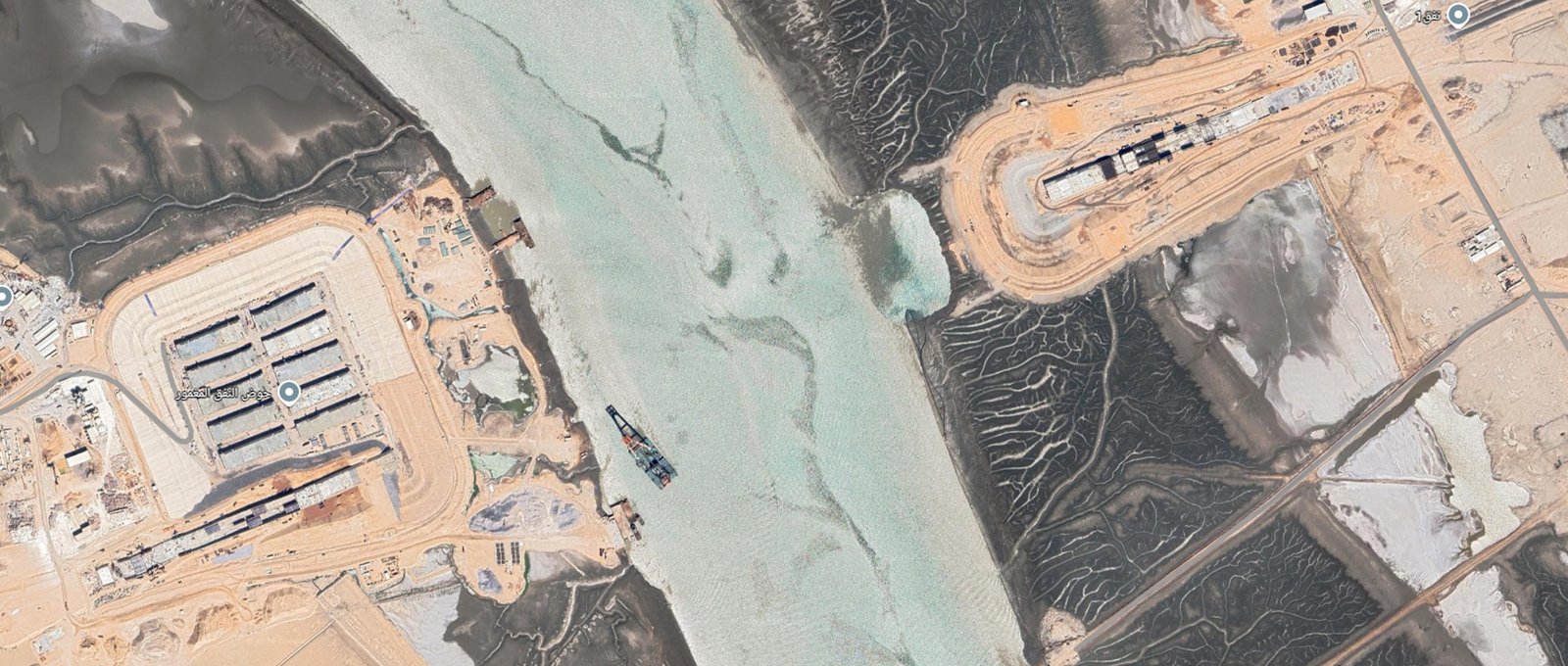
Fig. 2. Aerial view of the Khor Al Zubair Immersed Tunnel showing the surrounding geographical context and the locations of the Al-Faw and Umm Qasr portals.
The two tunnel portals face in opposite directions. Al-Faw portal faces E-NE (approximately 75° azimuth), receiving direct morning sunlight before self-shading, while the Umm Qasr portal faces W-SW (approximately 255° azimuth), receiving intense, low-angled, afternoon sunlight (Fig. 3).
Figure 3
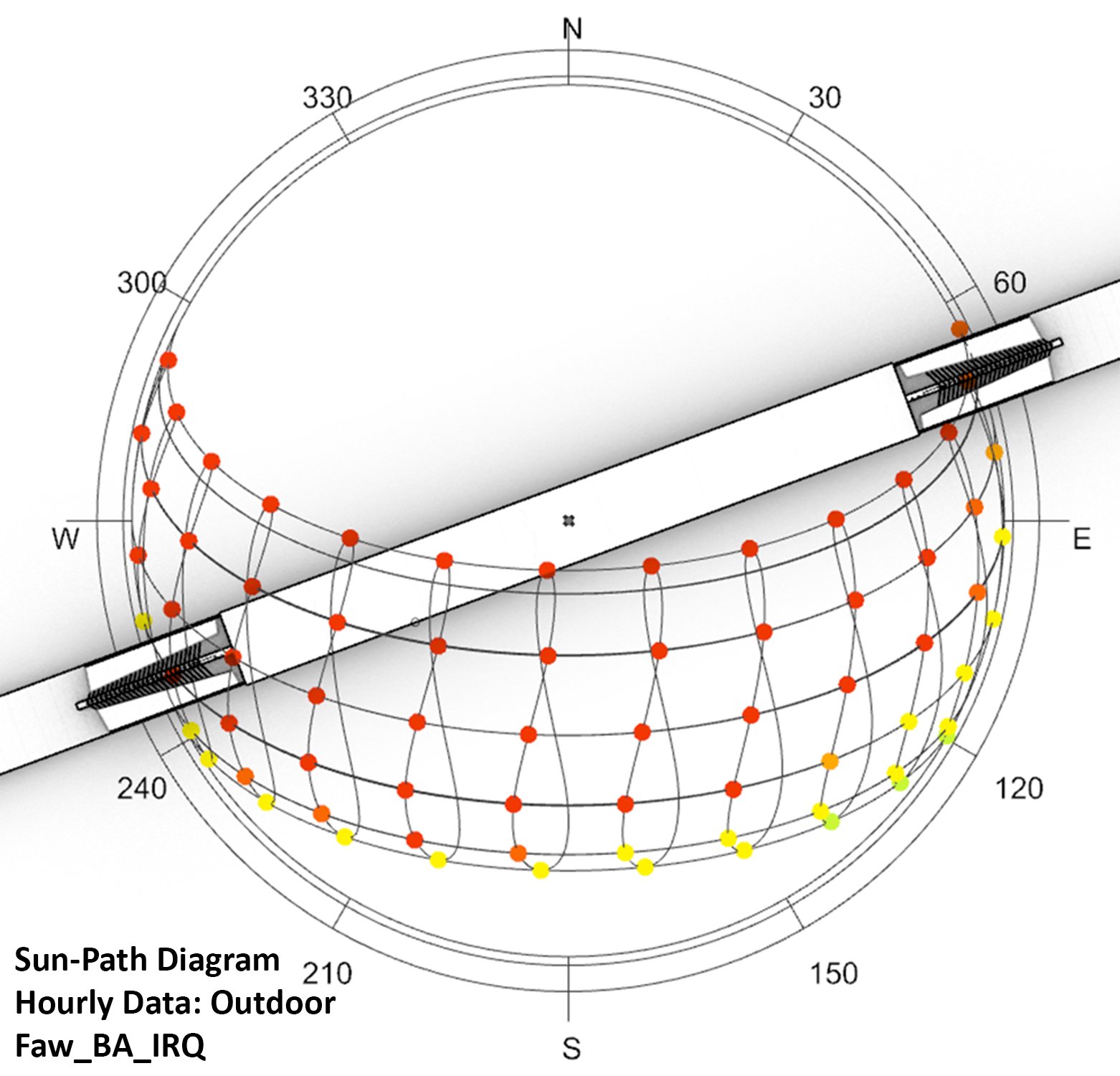
Fig. 3. Opposing portal orientations and solar geometry at latitude 30°N (Basra).
Therefore, the tunnel functions as a well-controlled, real-world comparative experiment, as both portals share an identical canopy design.
Consequently, any variations in visual comfort can thus be attributed entirely to solar orientation as an independent variable, rather than to geometric or climatic factors.
3.2. Options for incremental analysis
Four shading configurations were tested using an additive sequence, Options A to D (Opt. A–D), each of which progressively builds upon its predecessor (Fig. 4). Opt. A represents the unshaded open-cut baseline condition. Opt. B adds an overhead canopy over the approach road. Opt. C extends the canopy to cover the tunnel portal entrance. Finally, Opt. D represents a 3D lateral-wall enclosure, blocking adjacent oblique sunlight. This serial analysis assays the particular performance of each composite option using simulation data. This is relatively rare in such research, which commonly considers aggregate solutions rather than particular elements [22].
Figure 4
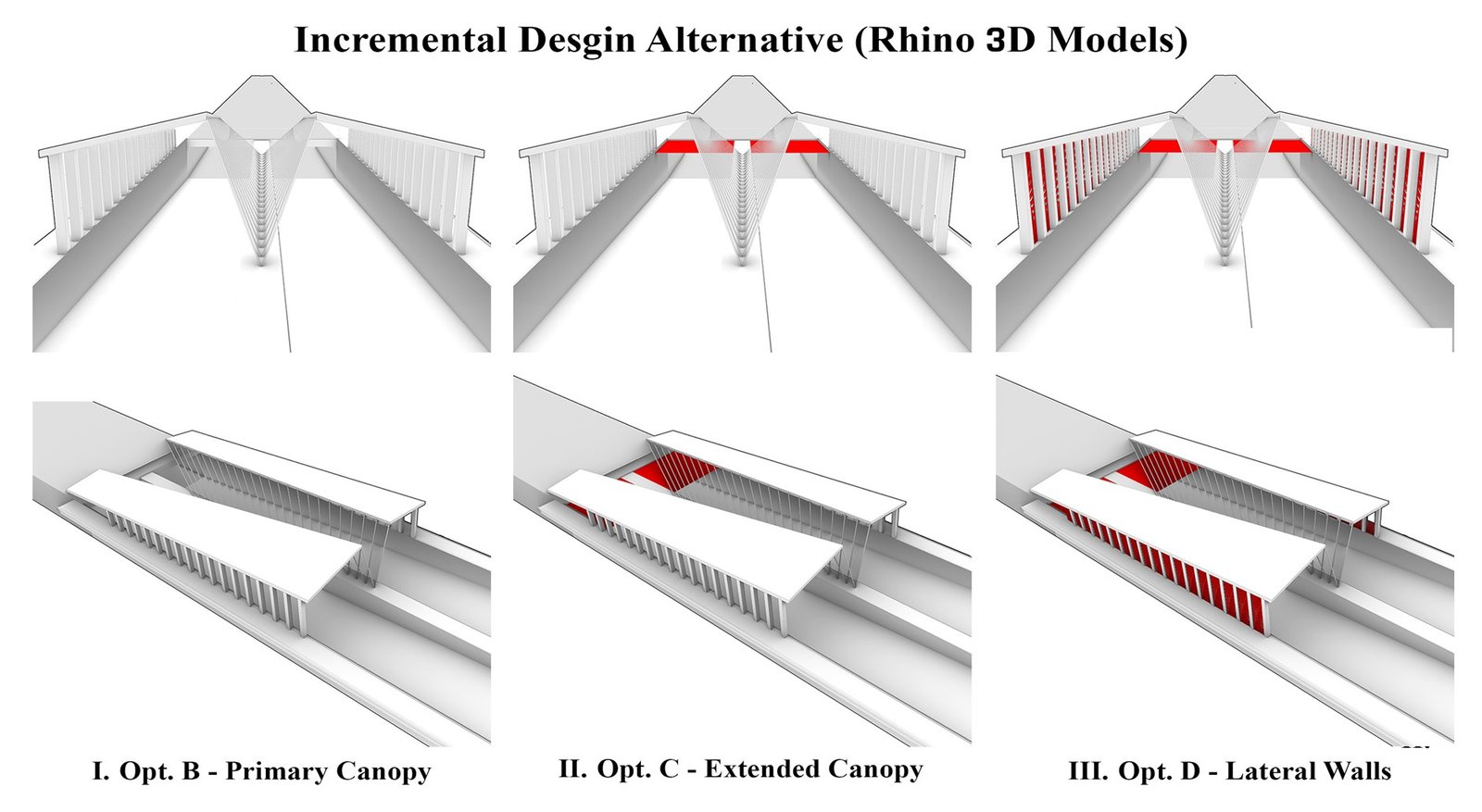
Fig. 4. 3D Rhino modeling of progressive design option solutions. Red indicates architectural elements added per step: (I) Opt. B, primary canopy above approaching pavement; (II) Opt. C, extended overhang over portal entrance; (III) Opt. D, lateral mesh wall enclosure.
3.3. Simulation parameters and engine
Solar exposure and vision-related comfort simulation options were run employing Radiance via the “Honeybee plugin” for “Grasshopper3D/ Rhinoceros3D” [14,25]. Solar irradiance is rigorously validated relative to CIE regulations [26]. To determine optical and mathematical accuracy before running the tunnel models, stringent quantitative validation was undertaken relative to the global CIE 171:2006 benchmark (“Test Case 6.2 - side-lit room”), whereby the foundational simulation configuration (ab =2, ad =512) was a valid simulacrum of the centerline grid’s solar exposure (Table 1), and solar radiance is axiomatically calibrated to empirical measurements (subject to a ±25% margin) [12,19]. Evalglare was used to measure glare, with the parameters described as optimum by previous studies (as per their Spearman correlation analysis) [27,28].
Table 1

Table 1. Radiance/ Honeybee workflow quantitative benchmark verification.
Seasonality was accommodated using Basra’s “Typical Meteorological Year (TMY3)” climate data, in EPW format (WMO 406890), aligned with the “Perez All-Weather Sky” framework [14,28,29].
For aquatic reflectance, rather than assigning a sole fixed diffuse value of reflectance to the aquatic surface i.e., (ρ_water), Fresnel behavior was used, relative to the water's “material type” in Radiance, with the calculation of specular reflections depending on angles. This arrangement enables varying aquatic reflectance to differ as per the angle of solar incidence (i.e., this is more apt when considering low sunlight angles in East-West orientations).
Honeybee’s default parameters of ambient conditions (“ab=2, ad=512, aa=0.25, ar=128, as=0”) were used for all 360 points of analysis, conferring efficiency and consistency concerning water reflectance, direct sunlight, and sky hemisphere. Additionally, the perspective of the user (i.e., drivers traversing the tunnel) was located 150 m from the portal; this comprised the stopping sight distance (SSD), relative to the standardized design speed for highways (100-110 km/h), as per CIE 88:2004.
3.4. Variables and evaluation metrics
This study employs a multi-factor comparative methodology based on three independent variables: architectural configurations (Opts. A to D, as illustrated in (Fig. 4), the geographical solar orientation of the tunnel portals (Al-Faw E-NE vs. Umm Qasr W-SW), and extreme seasonal climatic conditions (March, July, and December). Critical sun angles at 10:00, 13:00, and 17:00 were monitored in modeled scenarios, with users’ ocular position focused at 1.5 m. A quintet of measures analyzed disabling and psychological discomfort: “CIE Glare Index” (CGI < 25), “Daylight Glare Index” (DGI < 25), “Unified Glare Rating” (UGR < 28), “Veiling Luminance” (Lveil < 80 cd/m²), and “Visual Comfort Probability” (VCP > 70%). These measures encompass a diverse array of glare phenomena, as per global regulations [9,16]. The model of the methods used comprises a comprehensive workflow including geometric and climate variables (Fig. 5).
The equinox is a natural midpoint for solar angle, and we used March as a geometric proxy; the specific additional (and more complex) issues of September (dust, humidity, and water-reflectance) were beyond the scope of this study.
Figure 5
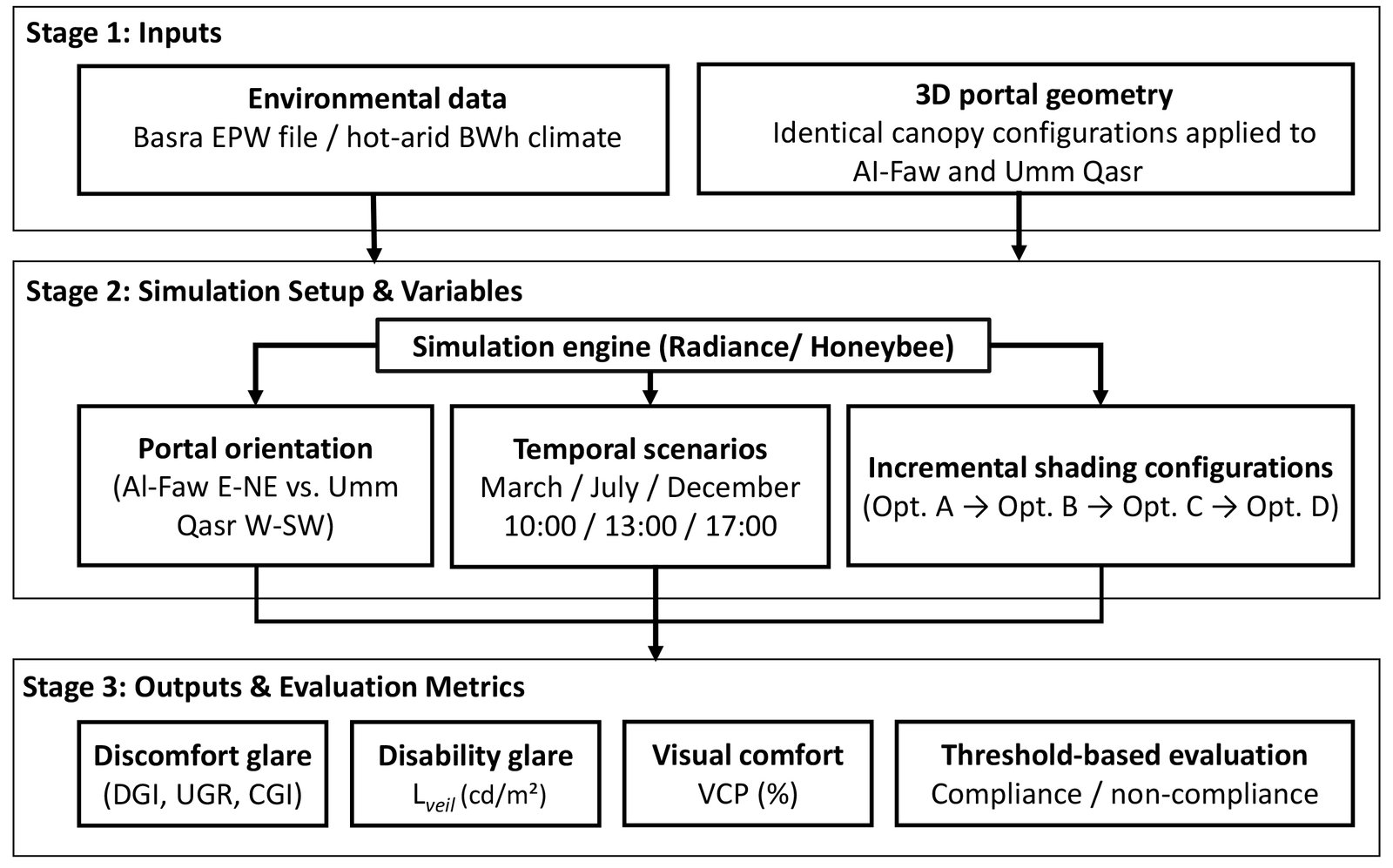
Fig. 5. Methodological workflow of the simulation-based glare evaluation.
3.5. Limitations and methodological safeguards
Our research suffers from some drawbacks that should be noted at the outset. First, the studied infrastructure is still being constructed, thus empirical field measurements could not be undertaken.
The simulations’ fidelity and validation were ensured by stringently following CIE 171:2006 simulation illumination test cases and Cloudless CIE Clear Sky models based on authentic Basra meteorological datasets (TMY3). Additionally, the driver’s viewpoint was represented as a static line of sight rather than a dynamic trajectory along the tunnel approach. These limitations result in a potential uncertainty margin of ±25% in absolute values. Therefore, the research could be refined empirically in future post-construction studies using, for example, calibrated High Dynamic Range (HDR) photography, in order to validate the simulation constants. However, through the comprehensive evaluation of all structural interventions, up to the maximum three-dimensional enclosure (Opt. D), the parametric dataset stands fully completed for both opposing portals, thereby minimizing structural uncertainty.
Nonetheless, the comparative design provides strong methodological safeguards. Because both portals are evaluated under identical simulation conditions, including the same simulation engine, weather file, material assumptions, viewpoint configuration, and evaluation metrics, any systematic simulation affects both portals in an identical manner, reducing its influence on the relative performance comparison. Consequently, the findings related to the core research questions remain methodologically robust as comparative results, even if the absolute numerical values require future post-construction field validation.
4. Results and discussion
4.1. Veiling luminance: the incremental progression and physical mechanisms
The veiling luminance (Lveil) showed a high degree of sensitivity to architectural choices and a clear contrast between orientations. As a critical metric of driver safety, Lveil quantifies the disability glare that physically obstructs visibility. The brightness distribution maps for both portals are shown in (Fig. 6), illustrating that at 17:00, the east-facing Al-Faw portal is completely shaded, while at the same time, the west-facing Umm Qasr portal suffers from severe glare. These maps visually reflect the (Lveil) trends observed during the most critical hours on both sides (13:00 for Al-Faw and 17:00 for Umm Qasr), while (Table 2) presents the detailed multi-metric glare performance under Opt. C, demonstrating how the performance of the identical canopy architecture changes with the orientation across all seasons and time points.
Figure 6
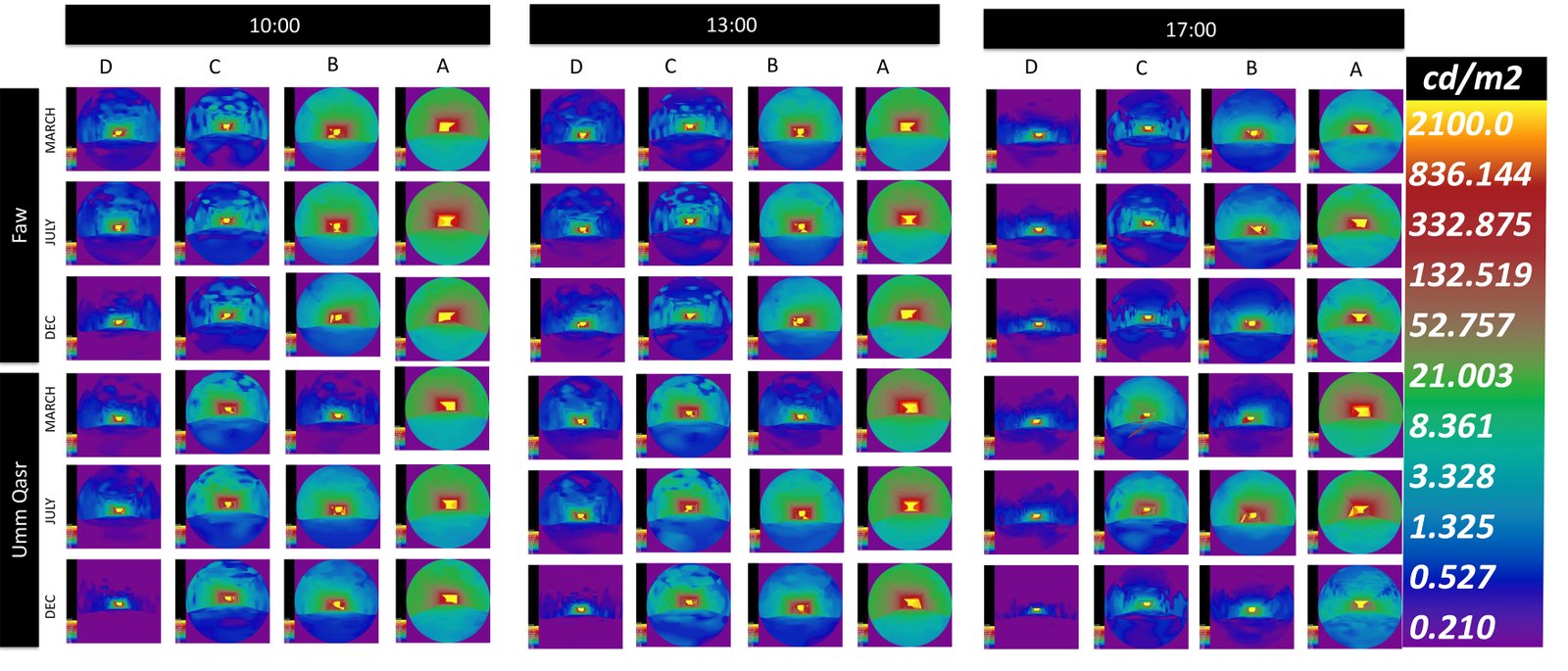
Fig. 6. Comprehensive luminance distribution maps from Radiance simulation. Rows: Al-Faw (top 3) and Umm Qasr (bottom 3) across March, July, December. Columns: three time points (10:00, 13:00, 17:00). Each cell shows Opt. D, Opt. C, Opt. B, and Opt. A (left to right).
Table 2
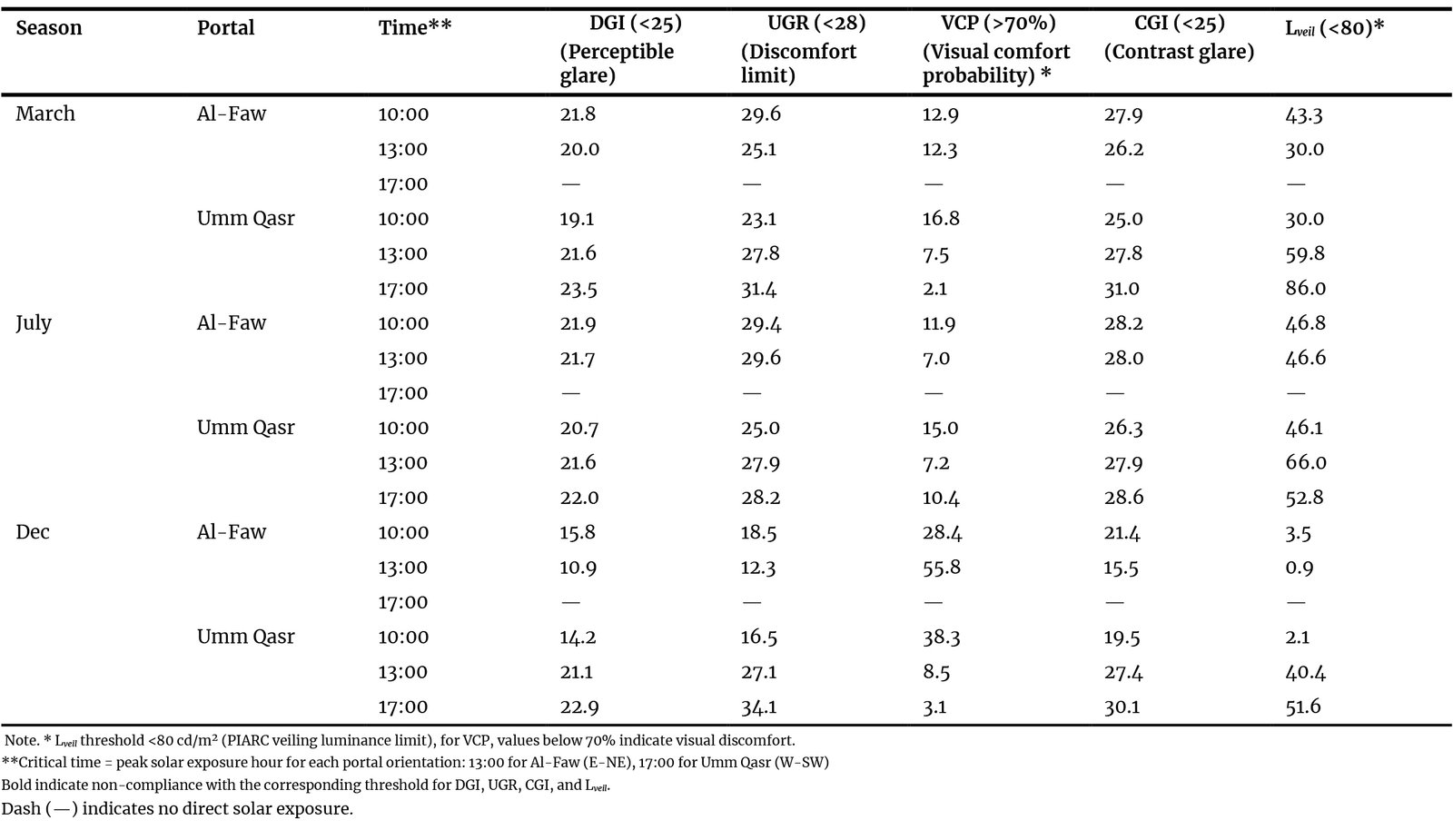
Table 2. Multi-metric glare performance under Opt. C at both portals across all seasons and time points. Bold values exceed the compliance threshold. Dash (—) indicates no direct solar exposure.
The Lveil results from the tested solutions indicate that the main canopy (Opt. B) did not suffice, changing only slightly at 13:00 in July by 6.9 cd/m² (from 251.7 to 258.6 cd/m²), which falls in the normal uncertainty band and which consequently ought to be viewed with caution. At 17:00 in the month of March, Opt. B achieved a 29% decrease in Lveil (from 159.0 to 112.7 cd/m²), it remained 41% above the PIARC-safe threshold of 80 cd/m².
This consistently limited performance across seasons points to a geometric limitation: the gap between the canopy’s end and the tunnel portal allows critical jump in luminance, rendering overhead shading alone ineffective.
Daylight containment is the primary determinant behind the higher effectiveness of Opt. C compared to Opt. B. The main canopy shades the road leading into the tunnel, but it leaves a gap between its end and the tunnel portal, allowing light to enter. This gap leaves drivers exposed to the open sky, water glare, and sudden luminance drops at the tunnel portal. This gap is closed in Opt. C (see Fig. 4 and Fig. 7). By covering the transition zone at the point where the eye needs to make the most adjustments, Opt. C blocks the residual light allowed by Opt. B, showing that canopy dimensions are of less significance that continuity of consistent shade.
Figure 7
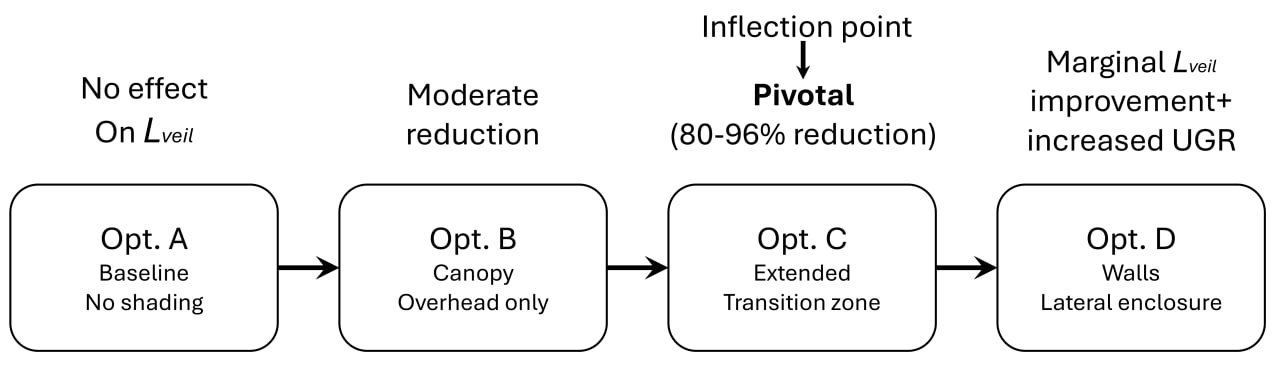
Fig. 7. The intervention hierarchy. Opt. C is the inflection point; Opt. D adds marginal Lveil benefit at the cost of sharply increased discomfort glare.
CIE 88:2004 underscores the significance of transitional areas for visual comfort, yet it lacks specific guidance in this regard.
The empirical results of this study support prioritizing total covering of the transitional space, which is much more effective than offering shade to the path of approach, irrespective of canopy dimensions and depth.
Opt. C exhibited major enhancement with a covered transitional area, reducing July (13:00) luminance at Al-Faw to PIARC compliance (80 cd/m²) at 46.6 cd/m², representing an 82% reduction. Importantly, Opt. C was highly efficacious at the July extreme of Umm Qasr (at 17:00), achieving 52.8 cd/m² from the baseline of 445.4 cd/m². Overall, Opt. C attained PIARC compliance in 17 of 18 tested scenarios. The solitary exception was Umm Qasr at 17:00 in March, whereupon Lveil exceeded the limit by 7.5% (at 86.0 cd/m²).
This equinoctial (low-angle, oblique solar) susceptibility required Opt. D’s lateral walls, offering shade via a 3D enclosed space, efficaciously preventing lateral West-Southwest solar infiltration that would otherwise get around canopy infrastructure.
4.2. The Lveil comfort dichotomy and optical optimization
The results of simulated models uncovered an obvious dichotomy between measures of physiological glare and vision-related comfort. More shade incrementally improved Lveil (i.e., progressing from Opt. B to Opt. D), but psychological indicators (i.e., UGR and CGI) indicated a converse major reduction in VCP. This inverted relationship between vision-related comfort and physiological glare mitigation can be seen in the dual-axis graph in (Fig. 8). It displays incremental shading increasing from Opt. B to Opt. D, progressively lowering Lveil and controlling hazy brightness, while there was a notable reduction in vision-related comfort (as shown in Table 3). At 13:00 in July in Al-Faw, the UGR reached 31.8 for Opt. D (from 23.2 at baseline in Opt. A). This 37% expansion severely overshoots the psychological glare threshold (28).
Figure 8
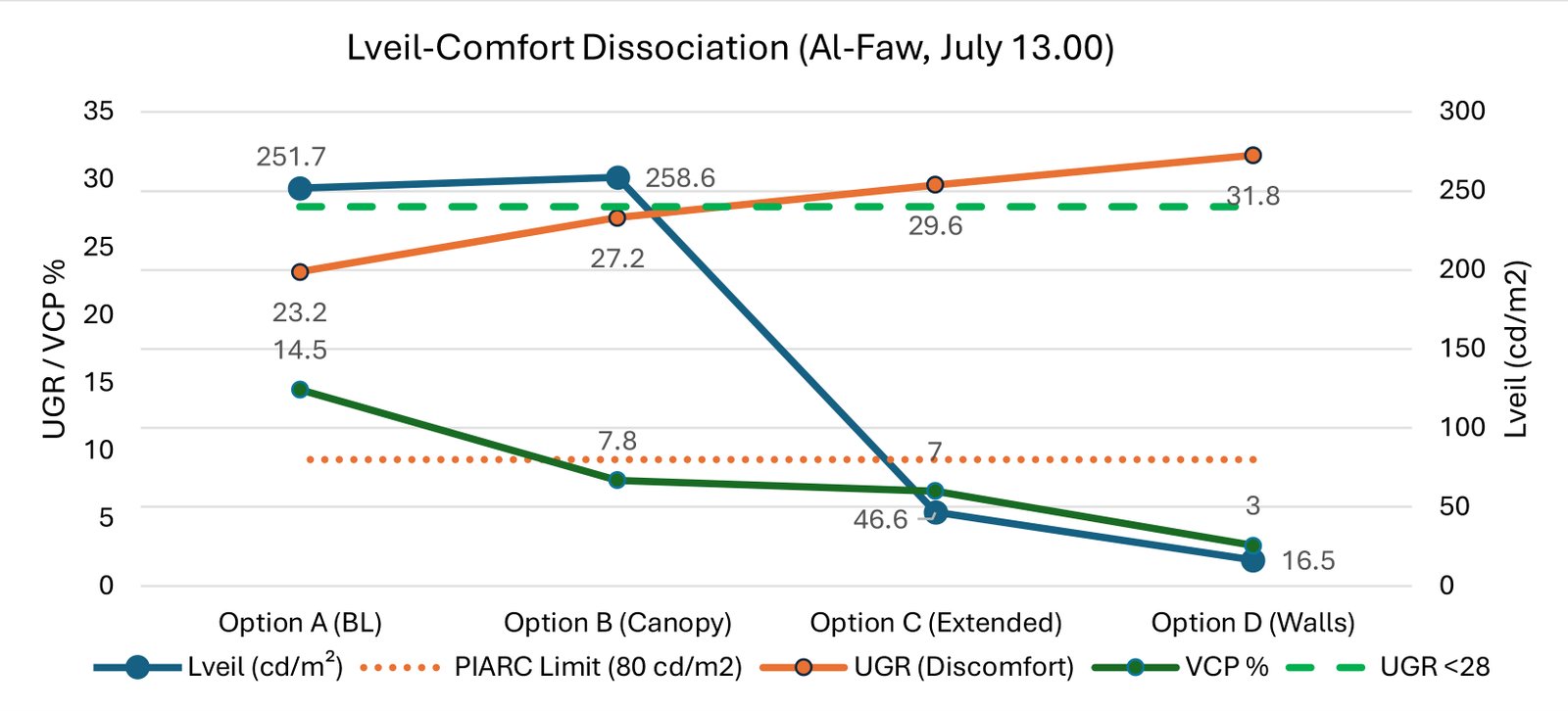
Fig. 8. Dissociation between disability glare (Lveil) and visual comfort metrics (UGR, VCP) under progressive shading interventions at Al-Faw portal (July, 13:00). Dashed lines indicate the allowable safety and comfort thresholds.
Table 3
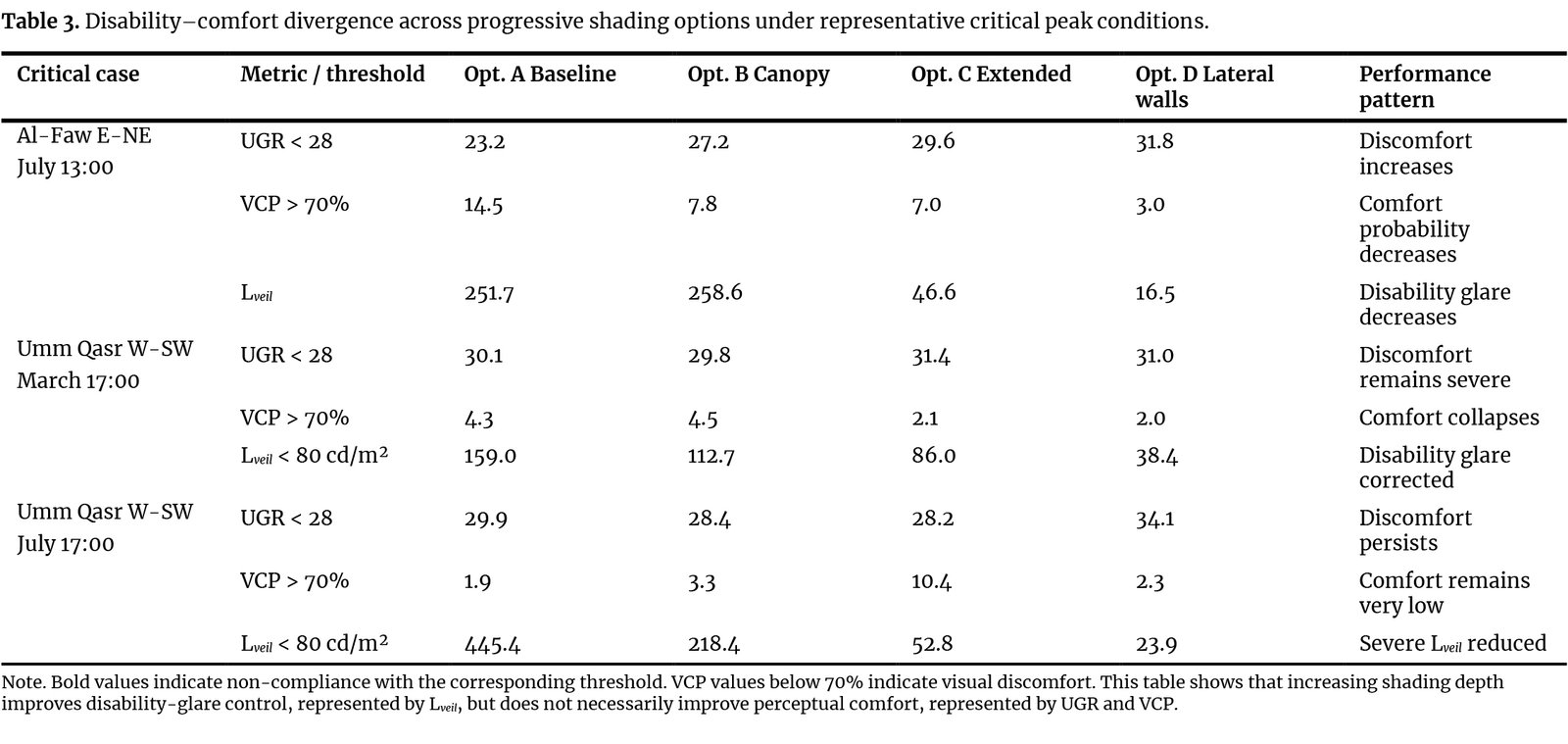
Table 3. Disability–comfort divergence across progressive shading options under representative critical peak conditions.
Simultaneously, as graphically illustrated by the converging downward trends under Opt. D (Fig. 8), the VCP plummeted from 14.5% to a critically low level of 3.0% even as Lveil was successfully suppressed to its absolute minimum of 16.5 cd/m². Similarly, during July at 17:00, the Umm Qasr portal failed to meet the comfort criteria, with the UGR level peaking at 34.1 (Table 3) consistently exceeding the acceptable limit of 28. This systemic failure is further corroborated by the March 17:00 scenario at Umm Qasr (Fig. 8), where UGR similarly peaked at 31.0 under Opt. D, while VCP collapsed to a mere 2.0%.
This dissociation arises from the physics of visual adaptation. While the main glare source is blocked by physical barriers, they simultaneously reduce the overall adaptive luminance, and this reduction in adaptation amplifies the relative contrast of the remaining specular reflections. Consequently, it is geometrically impossible to optimize both Lveil and UGR in the same direction using a single passive architectural tool.
The upshot is that Opt. C is mandated by the safety imperative of Lveil, entailing a comfort tradeoff that necessitates secondary mitigation (e.g., adaptive illumination or applying materials to reduce reflectance).
Under Opt. B in July at Al-Faw, the marginal (6.9 cd/m²) rise from 251.7 to 258.6 cd/m² in Lveil cannot be factored in as a major consideration as other mechanisms could be involved. This scenario, with intense sunlight, activated the overhang’s underside, whereby the shading counterproductively functions as a mirror for sunlight and water reflectance, adding new light rather than blocking glare. This mirroring phenomenon of the canopy itself is also instrumental in falling CGI and UGR values in Opt. D, and might be mitigated by applying low-reflectance materials and finishes. Additionally, an egregious reduction in vision adaption could be avoided by a light transmittance gradient gradually increasing away from the tunnel entrance, reducing Lveil progressively. The precise optical characteristics of ρ and τ should be ascertained by future measurements of modeled scenarios.
4.3. Differing performance by orientation
The heatmap in (Fig. 9) underscores the importance of the aperture’s orientation in the three studied months (March, July, December). Owing to natural afternoon shading, the east-facing Al-Faw portal experienced near-zero glare at 17:00 (marked as ‘—’). Conversely, the west-facing Umm Qasr portal registered its most hazardous baseline Lveil conditions (445.4 cd/m²) at the same hour in July. Essentially, one portal’s safest hour is the other’s most hazardous.
Figure 9
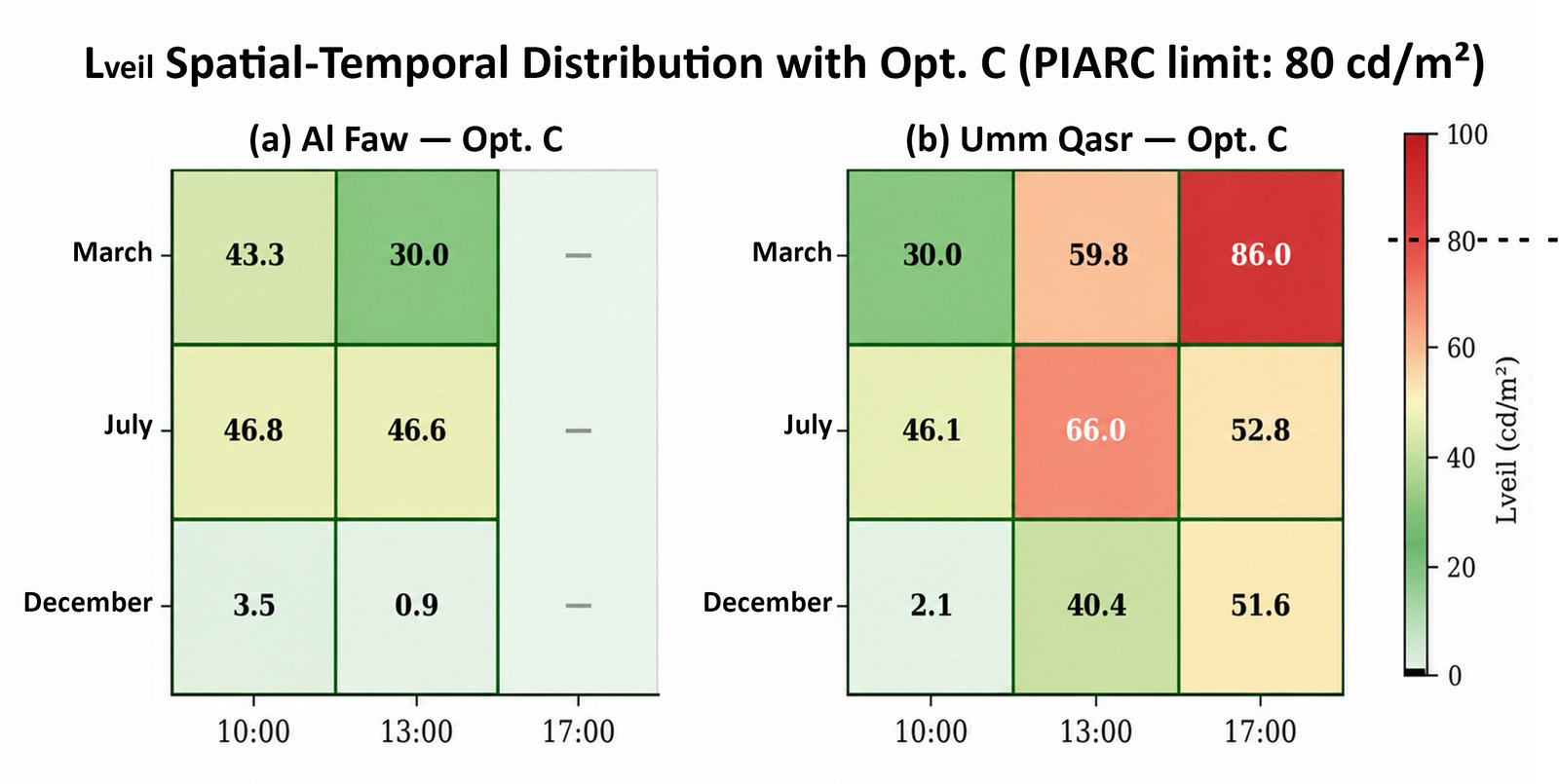
Fig. 9. Lveil spatial-temporal distribution under Opt. C. Green cells denote compliance with the PIARC limit (<80 cd/m²).
In both portals during December, Opt. C succeeded in lowering the Lveil below the PIARC threshold, but it only alleviated discomfort in Al-Faw (UGR 12.3, VCP 55.8%). In contrast, conditions at Umm Qasr remained extremely uncomfortable (UGR 34.1, VCP 3.1%). Furthermore, the heatmap (Fig. 9) shows that Opt. C exceeded the Lveil limit only once during the three months, specifically in March in Umm Qasr (17:00), reaching 86.0 cd/m².
A significant discrepancy was also identified in the unshaded baseline (Opt. A) data for Umm Qasr (July, 17:00). An exceptionally high baseline Lveil of 445.4 cd/m² coincided with a corresponding DGI of 23.8 (Fig. 10). This divergence may be related to DGI assaying specific focal points (of light), whereas Lveil is a broad-brush approach, which measures scattered, large reflection areas from the horizontal sky and nearby surfaces of water. Consequently, a completely geometric shade for westerly openings is deficient adjacent to water bodies. As a result, context meeting Lveil requirements may fail DGI, and the other way around. Such contexts consequently need further material attention (e.g., finishing with anti-reflective substances).
Figure 10
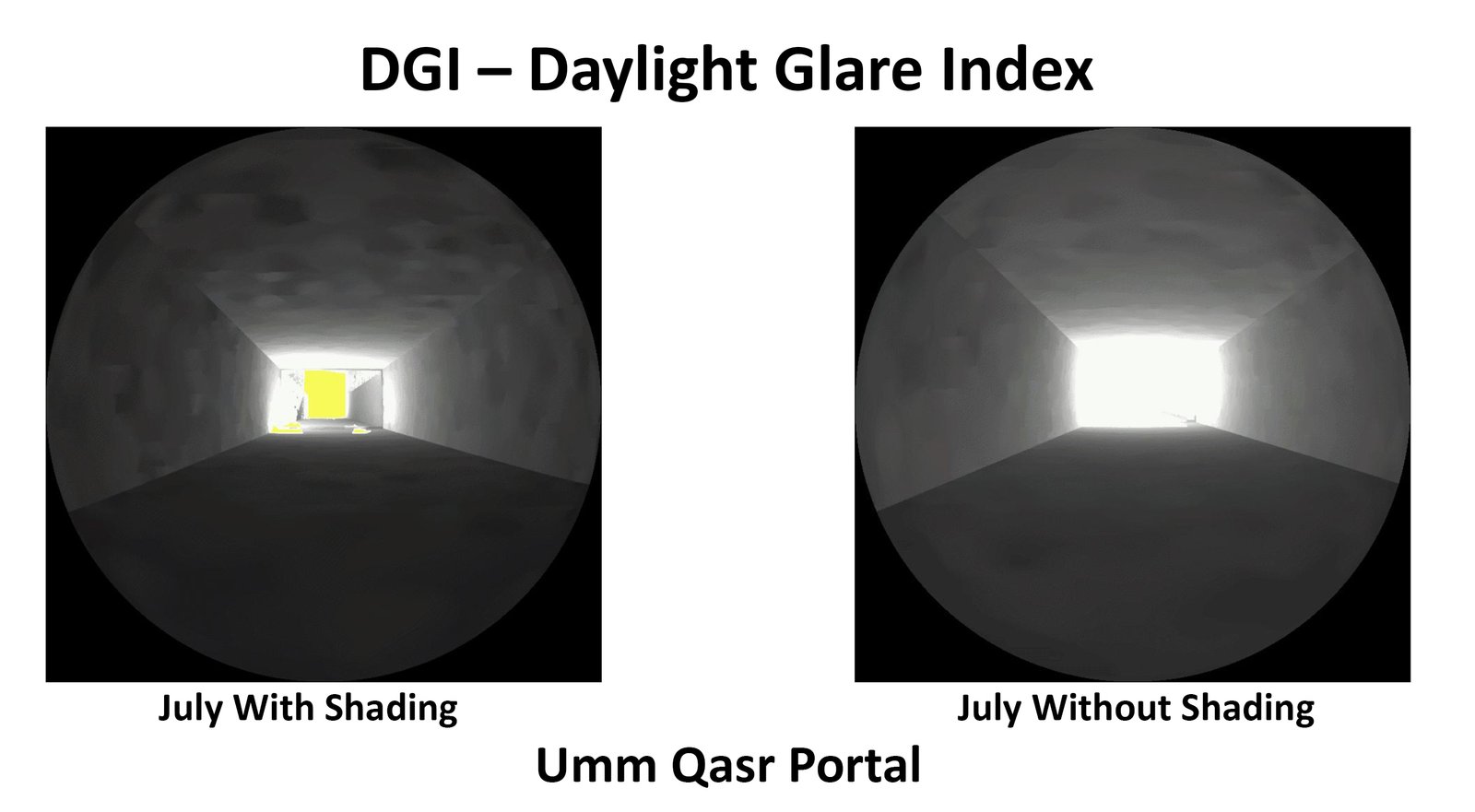
Fig. 10. Fisheye HDR representations of Umm Qasr in July, depicting DGI– Lveil contradiction. Sources of discrete glare (yellow, left) are isolated by the DGI algorithm, but cannot handle the large diffuse light spread without shade (right).
Our research explains differences in glare performance relative to shade at the studied sites using the “Performance Divergence Model” (Fig. 11). This framework shows that the same architectural solutions produce different results with differing orientations and environmental factors (e.g., water reflectance and sun angles). This framework highlights the elementary divergence between Lveil and psychological glare (UGR, CGI) outcomes, whereby localized solutions (and not universal models) are essential.
Figure 11
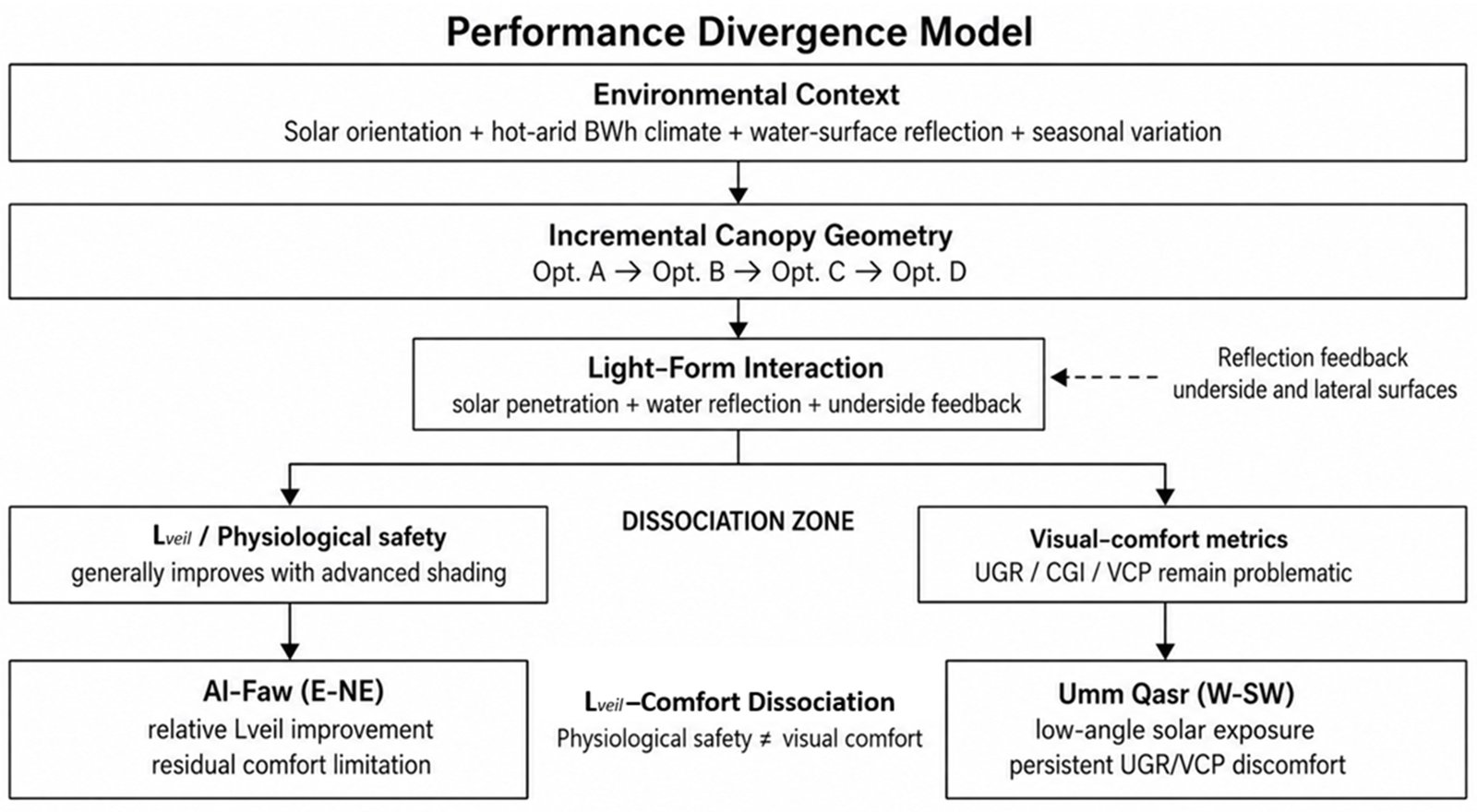
Fig. 11. Proposed “Performance Divergence Model” conceptual workflow and the Lveil-comfort dissociation phenomenon.
4.4. Implications for design theory
Apart from immediate contingency implications that can be directly applied to the studied sites, the outcomes of this research offer a triad of theoretical and conceptual contributions to design theory concerning environmental performance and architecture:
- “Context over form”: Infrastructure in itself does not universally contribute significantly to performance. For instance, the identical overhang reducing December’s Lveil by 96% at Al-Faw conversely made glare worse at Umm Qasr. Architectural impacts are completely contingent on localized applications [29,10].
- “The heuristic value of failure”: Comparative analysis revealed three distinct failure patterns, that serve as analytical tools rather than mere negative outcomes, namely failure in: (1) orientation (when geometric parameters are not aligned with the main sunlight exposure); season, when the dynamic differences in solar exposure are not matched by structures; and metric, when the dynamic solar movement is not harnessed by the system, such as how Opt. D reduced UGR/CGI while enhancing Lveil. These patterns together generate “design-informed knowledge” [30,31], which defines the theoretical boundaries of architectural intervention.
- “Standard dissociation”: The study confirms a structural dissociation between physiological disability glare (Lveil) and discomfort glare (UGR/CGI). Since these variables can be affected in opposite directions by the same architectural intervention single-metric assessments are theoretically and practically insufficient to evaluate shading performance.
4.5. Limitations and future work
This study identifies several limitations that warrant further investigation, as summarized in the list below.
- “Static vs. dynamic evaluation”: All simulations were performed from a static perspective within the threshold zone to monitor the change in focal luminance at the portal mouth. While this aligns with the CIE 88:2004 L20 evaluation framework, this approach overlooks the spatial and temporal dynamics of a moving driver. Therefore, future research should incorporate sequential dynamic path modeling to evaluate the temporal visual adaptation. The static perspective may overestimate the access-zone advantage of Opt. C over Opt. B.
- “Material properties”: The properties of the canopy materials (reflectivity, perforation ratio, and element inclination) were not addressed; therefore, further parametric studies are needed to elucidate the mechanism of inter-reflection beneath the canopy.
- “Water surface dynamics and reflectance ( _water)”: Water reflections were modeled using the Radiance water material type, which accounts for angle-dependent specular reflection. However, real-world coastal water surfaces vary with wind, turbidity, tide, and wave agitation. Future studies should therefore calibrate water-surface reflection using HDR luminance measurements or dynamic BRDF-based modeling.
- “Experimental verification and generalization”: Because the tunnel is still under construction, the study relied entirely on computer simulations. Therefore, field verification (once the tunnel is completed) using calibrated High Dynamic Range (HDR) photography will be crucial to validate the simulation predictions and calibrate the adaptive lighting parameters. Subsequently, extending this methodology to similar (hot-arid coastal) environments, such as in the Gulf region, could contribute evidence toward future regional adaptations of international standards.
5. Conclusion
This research tested four portal design cases (a basic design without shading, and three designs with incremental shading) at two opposing tunnel portals in a hot-arid climate, resulting in a 360-point, multi-metric dataset. The data support several clear conclusions, as adumbrated below.
- Portal orientation determines shading effectiveness. A uniform canopy design reduced the veiling luminance (Lveil) by 96% at the east-facing portal but, conversely, exacerbated it at the west-facing portal. This indicates that generalized, homogenous shading of both east and west portals is an oversight in prevailing designs.
- The transitional zone between outside and inside is critical. Opt. C was fundamentally apt for all entrances in all seasons due to continuously offering shade to the entrance of the portal, exhibiting the largest Lveil reduction and compliance with PIARC regulations.
- This study identified a hitherto neglected issue: the compromise between optimum comfort and user safety, which becomes more acute as architectural structures increase in mass (e.g., more “enclosure,” such as extensive vertical walls). More deep offerings of shade minimize the luminous veil, which throws surviving bright spots into sharper contrast against the gloam, exacerbating UGR, notwithstanding enhanced safety relative to reduced disabling glare. Consequently, single-measure assays do not suffice to evaluate such portal, and multiple measures are necessary, holistically addressing both safety and vision-related comfort.
- Passive design, while reducing electricity costs, has clear limitations. Deep architectural shade minimized Lveil and attained compliance with PIARC for all 18 cases, reducing baseline upper luminance (445.4 cd/m²) (under the threshold of 80 cd/m²). Nevertheless, the passive solutions failed to resolve the psychological glare (UGR) at the West-Southwest portal (where it reached 34.1 at 17:00), while VCP became negligible (near 0%). Secondary active solutions need to be integrated, such as responsive illumination or high light absorbance infrastructure, to confer vision-related comfort.
6. Implications for practice and standards
The identified functional drawback is indicative that East-West oriented portals of tunnels (particularly east-facing) in coastal, hot, arid climates require particular designs to responsively avoid “black hole” visual comfort and safety issues. Conventional solutions in this regard include employing louvers or installing adaptive, intelligent illumination arrays that can adapt to ambient light conditions instantly (although these still struggle to bridge the chasm between intense solar radiation outside and relative gloom inside, despite using vast amounts of energy and increasing operational costs drastically) [3]. The transitional space between bright and dark must account for local microclimates, and global benchmarks are evidently too generalized for intense solar radiation contexts and water reflectance, such as the context studied in this research. This localized, specific case study evidences that more specific designs and guidelines need to be developed within the framework of global regulations (e.g., CIE and PIARC), acknowledging portals of tunnels as particularly sensitive microclimate architectural contexts.
Funding
This research received no external funding
Author Contributions
Conceptualization, Z.N. and S.F.; methodology, Z.N., T.S. and S.F.; software, T.S.; validation, Z.N. and T.S.; formal analysis, Z.N.; investigation, Z.N., S.F. and I.A.; resources, Z.N.; data curation, Z.N. and T.S.; writing—original draft preparation, Z.N. and I.A.; writing—review and editing, I.A., L.K. and Z.N.; visualization, Z.N. and T.S.; supervision, Z.N. and S.F.; project administration, Z.N. All authors have read and agreed to the submitted version of the manuscript.
Acknowledgement
The authors would like to thank the consultants, engineers, and technical and administrative staff who facilitated access to project-related information. The authors also acknowledge ZAN Engineering Consultancy for providing access to the computational resources used in the simulation work.
Declaration of competing interest
Author Tabarak Talal Salman is affiliated with ZAN Engineering Consultancy. The authors declare that this affiliation did not influence the study design, analysis, interpretation of results, or conclusions.
Supplementary information
Supplementary Table A1 of Appendix A provides the complete simulation matrix supporting the results reported in the manuscript.
Appendix A
Table A1
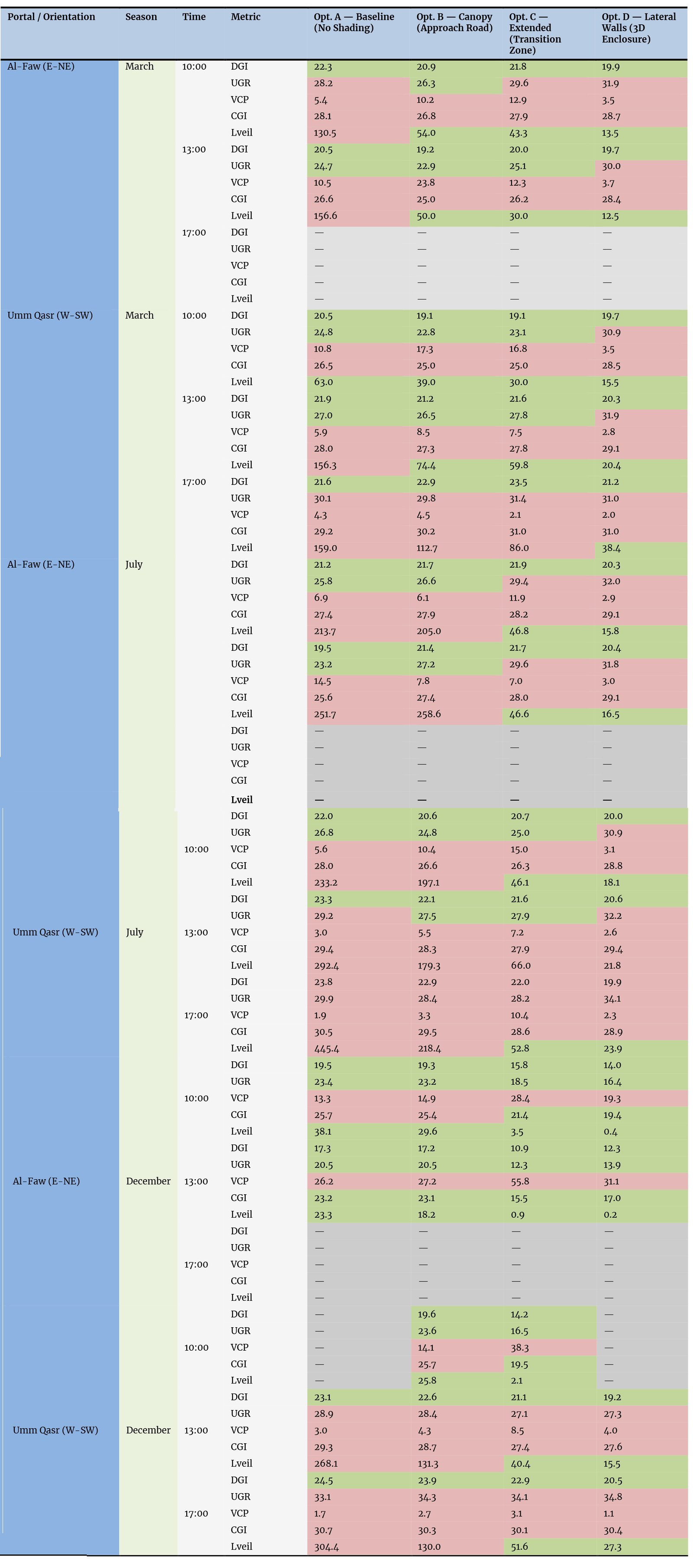
Table A1. Complete Glare Performance Matrix — All Options (A–D), Portals, Seasons, and Time Points.
References
- A. Alkhreasat, N. Al-Hammadi, F. Aboudi, R. Shaaban, A proposal for managing glare's effect on tunnels: Abdoun tunnel case, Journal of Engineering and Architecture, 7:2 (2019) 84-95. https://doi.org/10.15640/jea.v7n2a9
- A. Peña-García, J. Cabeza-Laínez, Daylighting of road tunnels through external ground-based light-pipes and complex reflective geometry, Tunnelling and Underground Space Technology, 131 (2023) 104788. https://doi.org/10.1016/j.tust.2022.104788
- F. Zhu, H. Xie, L. Chen, C. Wang, Y. Chen, L. Wang, Impact of lighting environment variations in highway tunnels on drivers' psychological load: An integrated AHP-FCE, Buildings, 16:4 (2026) 740. https://doi.org/10.3390/buildings16040740
- F. Salata, I. Golasi, S. Bovenzi, E. de Lieto Vollaro, F. Pagliaro, L. Cellucci, M. Coppi, F. Gugliermetti, A. de Lieto Vollaro, Energy optimization of road tunnel lighting systems, Sustainability, 7:7 (2015) 9664-9680. https://doi.org/10.3390/su7079664
- A. Peña-García, An introduction to tunnel lighting: Basis, calculations, and future lines in the interface between safety and sustainability, Underground Space, 26 (2026) 220-234. https://doi.org/10.1016/j.undsp.2025.06.008
- P. Yuan, G. Tang, C. Ji, Y. Wu, Q. Wang, T. Zhang, T. Liu, Y. Chen, Intelligent control characteristics and development of highway tunnel lighting environment in China, Sustainability, 16:14 (2024) 5961. https://doi.org/10.3390/su16145961
- J. Xiao, B. Liang, J. Niu, C. Qin, Study on the glare phenomenon and time-varying characteristics of luminance in the access zone of the east-west oriented tunnel, Applied Sciences, 14:5 (2024) 2147. https://doi.org/10.3390/app14052147
- A. Peña-García, Scaled hillsides to decrease the energy consumption of lighting installations in road tunnels, Tunnelling and Underground Space Technology, 148 (2024) 105779. https://doi.org/10.1016/j.tust.2024.105779
- CIE, Guide for the Lighting of Road Tunnels and Underpasses, CIE 88:2004, Commission Internationale de l'Éclairage: Vienna, Austria, 2004. http://15805587.s21d-15.faiusrd.com/61/ABUIABA9GAAglI6g0w UoyMWe3gI.pdf
- I. Kistelegdi, K. R. Horváth, T. Storcz, Z. Ercsey, Building geometry as a variable in energy, comfort, and environmental design optimization-A review from the perspective of architects, Buildings, 12:1 (2022) 69. https://doi.org/10.3390/buildings12010069
- A. Danzo, P. Verde, P. Varilone, A. Gallo, A. Sebastiani, Management and assessment of road tunnel lighting to improve energy efficiency and performance in view of self widespread consumption, in: Proceedings of the 2024 AEIT International Annual Conference, Trento, Italy, 25-27 September 2024, pp. 1-6. https://doi.org/10.23919/AEIT63317.2024.10736839
- D. Drakou, C. Burattini, A. Mangione, F. Bisegna, Exploring the daylight simulation of filter panels in a pre-tunnel structure, in: Proceedings of the 2017 IEEE International Conference on Environment and Electrical Engineering and 2017 IEEE Industrial and Commercial Power Systems Europe, Milan, Italy, 6-9 June 2017, pp. 1-5. https://doi.org/10.1109/EEEIC.2017.7977672
- S. Wasilewski, L. O. Grobe, J. Wienold, M. Andersen, A critical literature review of spatio-temporal simulation methods for daylight glare assessment, SDAR Journal of Sustainable Design in Engineering of the Built Environment, 7:1 (2019) 4. https://doi.org/10.3929/ethz-b-000618468
- D. Y. J. Sun, A study of the integration of semi-transparent photovoltaics with sunscreen structures in a major transportation infrastructure tunnel, Master's thesis, Concordia University: Montreal, Canada, 2019, pp. 1-110.
- R. Looman, Climate-responsive design: A framework for an energy concept design-decision support tool for architects using principles of climate-responsive design, A+BE | Architecture and the Built Environment, 7:1 (2017) 1-282. https://doi.org/10.59490/ABE.2017.1.1643
- PIARC, Road Tunnels: Operational Strategies for Road Tunnel Lighting, World Road Association: Paris, France, 2019, https://tunnelsmanual.piarc.org/en.
- W. Lai, X. Liu, W. Chen, X. Lei, X. Cheng, Light intensity distribution optimization for tunnel lamps in different zones of a long tunnel, Optics Express, 22:19 (2014) 22952-22961. https://doi.org/10.1364/OE.22.022952
- A. Mehri, M. Aliabadi, R. Golmohammadi, S. A. Zakerian, An empirical investigation of disability glare and visibility level during driving inside very long road tunnels: A case study, Tunnelling and Underground Space Technology, 125 (2022) 104496. https://doi.org/10.1016/j.tust.2022.104496
- C. F. Reinhart, O. Walkenhorst, Validation of dynamic RADIANCE-based daylight simulations for a test office with external blinds, Energy and Buildings, 33:7 (2001) 683-697. https://doi.org/10.1016/S0378-7788(01)00058-5
- F. Zhang, J. Lu, X. Hu, X. T. Hao, investigating safety impact of sun glare in urban tunnels based on cellular automata approach, Accident Analysis & Prevention, 148 (2020) 105821. https://doi.org/10.1016/j.aap.2020.105821
- P. Chiradeja, S. Yoomak, Optimal tunnel lighting design in aspect of lighting quality and energy performance, Tunnelling and Underground Space Technology, 131 (2023) 104837. https://doi.org/10.1016/j.tust.2022.104837
- S. Xin, Y. Wei, Z. Zhao, N. Liu, S. Liu, Y. Qu, Tunnel lighting optimisation study based on sunshade, Tunnelling and Underground Space Technology, 151 (2024) 105863. https://doi.org/10.1016/j.tust.2024.105863
- J. W. Creswell, J. D. Creswell, Research Design: Qualitative, Quantitative, and Mixed Methods Approaches, 5th ed., SAGE Publications: Thousand Oaks, CA, USA, 2018, pp. 1-304. https://lccn.loc.gov/2017044644
- General Company for Ports of Iraq, Technical Requirements and Site Specifications for Khor Al Zubair Immersed Tunnel Project, General Company for Ports of Iraq: Basra, Iraq, 2025.
- M. S. Roudsari, M. Pak, A. Viola, Ladybug: A parametric environmental plugin for Grasshopper to help designers create an environmentally-conscious design, in: Proceedings of BS2013: 13th Conference of International Building Performance Simulation Association, Chambéry, France, 26-28 August 2013, pp. 3128-3135.
- CIE, Test Cases to Assess the Accuracy of Lighting Computer Programs, CIE 171:2006, Commission Internationale de l'Éclairage: Vienna, Austria, 2006, https://cie.co.at/publications/test-cases-assess-accuracy-lighting-computer-programs.
- C. Pierson, J. Wienold, M. Bodart, Daylight discomfort glare evaluation with Evalglare: Influence of parameters and methods on the accuracy of discomfort glare prediction, Buildings, 8:8 (2018) 94. https://doi.org/10.3390/buildings8080094
- J. Wienold, J. Christoffersen, Evaluation methods and development of a new glare prediction model for daylight environments with the use of CCD cameras, Energy and Buildings, 38:7 (2006) 743-757. https://doi.org/10.1016/j.enbuild.2006.03.017
- S. Wilcox, W. Marion, Users Manual for TMY3 Data Sets, Revised, Technical Report NREL/TP-581-43156, National Renewable Energy Laboratory: Golden, CO, USA, 2008. https://quantumalliance.org/downloads/nrel_docs.pdf.
- R. C. G. M. Loonen, M. Trčka, D. Cóstola, J. L. M. Hensen, Climate adaptive building shells: State-of-the-art and future challenges, Renewable and Sustainable Energy Reviews, 25 (2013) 483-493. https://doi.org/10.1016/j.rser.2013.04.016
- M. Fraser, Design Research: Methods and Perspectives, 1st ed. eBook, Routledge: London, UK, 2021, pp. 1-312. https://doi.org/10.4324/9781315258126
Disclaimer/Publisher’s Note: The statements, opinions and data contained in all publications are solely those of the individual author(s) and contributor(s) and not of Solarlits and/or the editor(s). Solarlits and/or the editor(s) disclaim responsibility for any injury to people or property resulting from any ideas, methods, instructions or products referred to in the content.
 Get PDF (10.2 MB)
570
Total views
Citations
SHARE ON


